Entering a Gulf market: define the route before the launch
“We want to sell in the Gulf” is a direction, not yet a market-entry plan. A distributor buying for resale, a contractor specifying a product and a factory buying an input follow different purchasing processes. The first task is to choose which of those processes you are equipped to serve.

Choose a market-and-channel combination
Start with one country, one buyer type and a limited product offer. Then state the reason a buyer might consider changing supplier: a measurable specification, availability, service or a different total cost. General statements about quality are difficult to test in a commercial conversation.
Separate local consumption from onward distribution. A company using Dubai as a regional trading base may evaluate your offer differently from an end user in the UAE. Likewise, do not assume that a promising conversation in one country establishes demand elsewhere. Record the intended destination and use of the goods before comparing opportunities.
Test the buying process through conversations
Ask who evaluates the sample, who approves a supplier and what information precedes a quotation. A contact who likes a product may have no authority to buy it. The aim of early research is to learn how a purchase happens, including the reasons it does not happen.
Keep a small evidence log. Record what the buyer actually said, what you inferred and what remains unconfirmed. Three detailed conversations can be more useful for a first decision than a long unqualified contact list. They are still research, not proof of market size.
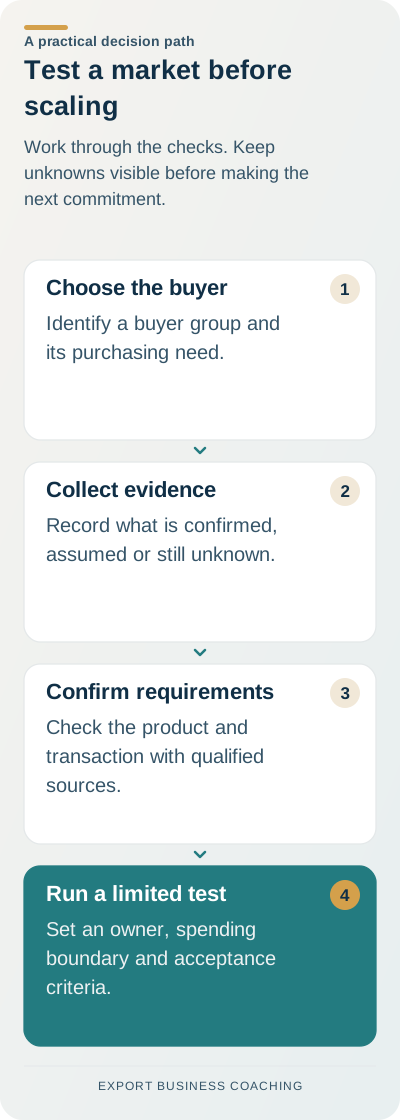
Test a market before scaling
Work through the checks. Keep unknowns visible before making the next commitment.
Read the diagram as text
- Choose the buyer
Identify a buyer group and its purchasing need.
- Collect evidence
Record what is confirmed, assumed or still unknown.
- Confirm requirements
Check the product and transaction with qualified sources.
- Run a limited test
Set an owner, spending boundary and acceptance criteria.
Verify requirements for the product and destination
Use the relevant customs authority as a starting point, then confirm the transaction with the importer and qualified advisers. Oman Customs provides a product-requirements search; Dubai Customs distinguishes prohibited and restricted goods. These are product-specific checks, not a generic clearance certificate for a business idea.
Do not publish a delivery promise before checking the exact goods, proposed route and parties involved. Requirements for import, resale and product approval can be different questions. A commercial coaching discussion can organise the checks; it does not replace the authorities or the professionals responsible for them.
Tell us what you make and where you want to sell. We can start with a short conversation.
Speak to our teamDesign a pilot with a useful answer
Define the question the pilot should resolve. It might be acceptance of a specification, repeatability of a delivery process or willingness to request a paid trial. Set a spending boundary, owner, review date and acceptance criteria. Avoid committing to broad stock or exclusive distribution before the evidence justifies it.
Track progress through buyer actions: a technical review, an agreed sample test or a quotation request. Messages sent and meetings held are activity measures, not sales outcomes. At the review, decide whether to continue, change one assumption or stop the test.
Bring the next decision to the table
If you are comparing the UAE and Oman, share your product, intended buyer and the information already gathered. A focused initial conversation can identify what must be checked next. It is more productive than asking which country is “best” without reference to a product, channel or resource limit.
Questions before you begin
Should we register a local company first?
That depends on the intended activity and route to market. Clarify those choices and obtain qualified local advice before making a registration commitment.
Can one distributor cover the whole region?
Possibly, but coverage, capability, permissions and incentives need evidence. A regional claim should not substitute for checking performance in each intended market.
Sources and further reading
Related guides

How to qualify international buyers before committing resources
Turn international sales contacts into an evidence-based pipeline. Check fit, identity, buying authority and the next commercial step before committing.

Export pricing: build a quotation you can explain
Build an export quotation around a defined unit, order quantity, delivery point and payment terms. Includes a worked example and a quotation checklist.

Export readiness: could your business fulfil the order?
Assess your product, spare capacity, working capital and sales ownership before committing to a new export market. Includes a practical readiness checklist.