Export pricing: build a quotation you can explain
A price is only comparable when the offer behind it is clear. Does it include packaging? Which delivery point is named? What quantity and specification does it cover? Before lowering a price to win an overseas buyer, make sure both sides are comparing the same commitment.

Define the unit and the order
Choose a sales unit that the buyer understands and link it to a specification. If the unit is a carton, state what is inside. If the product has variants, identify the variant the price covers. Ambiguity here can survive several rounds of negotiation and emerge as a dispute after delivery.
Separate recurring unit costs from order-level costs. Product adaptation, artwork, testing or preparation may not change proportionately with volume. Treating these as an invisible percentage can make a small trial order appear more profitable than it is.
Use a worked example without mistaking it for a market rate
Imagine 1,000 units cost 8,000 in production and packaging, with a further 1,000 in order preparation. Before other commitments, the cost is 9 per unit. A 500-unit order with the same preparation charge has a higher unit cost. These are fictional figures to explain the method, not a benchmark for any product or route.
With a cost of 9 and a selling price of 12, the difference is 3. That is a 25% gross margin on selling price and about a 33% markup on cost. The two percentages answer different questions. Neither is net profit when other relevant business costs remain outside the calculation.
Build a clear export quotation
Work through the checks. Keep unknowns visible before making the next commitment.
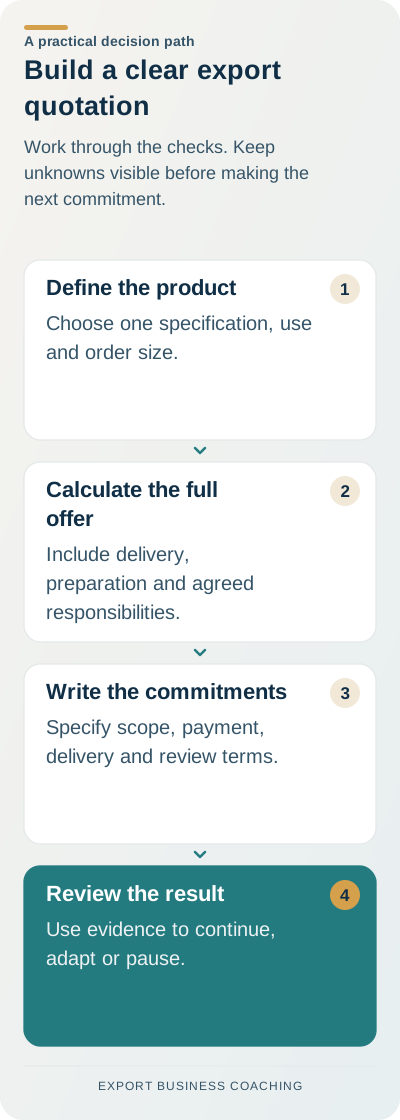
Read the diagram as text
- Define the product
Choose one specification, use and order size.
- Calculate the full offer
Include delivery, preparation and agreed responsibilities.
- Write the commitments
Specify scope, payment, delivery and review terms.
- Review the result
Use evidence to continue, adapt or pause.
Make delivery and payment part of the calculation
Name the agreed delivery place and explain which costs each party carries. If a trade term is used, specify the agreed rule and version and obtain specialist clarification where needed. A shorthand term does not settle every issue of payment, ownership or contractual responsibility.
Include the cash implications of the payment schedule. A longer interval before payment can require more working capital. Freight, insurance, destination charges and taxes should be checked for the actual product and transaction; do not copy a figure from an unrelated shipment. Record quotation validity and unresolved estimates.
Tell us what you make and where you want to sell. We can start with a short conversation.
Speak to our teamGive the quotation a version and a boundary
A clear proposal has a reference, date, validity period and scope. When assumptions change, issue a new version. Your production team, sales contact and buyer should be able to identify the same offer.
- Product specification, unit and order quantity.
- Currency, unit price and order total.
- Preparation lead time and agreed delivery point.
- Payment schedule and quotation validity.
- Included documents, exclusions and items awaiting confirmation.
Respond to price objections with a comparison
Ask what specification, quantity and delivery conditions the competing offer includes. A discount may be appropriate, but it should follow a decision about value and economics. For an initial review, prepare an anonymised quotation and the cost information you already hold. Leave missing figures visible; replacing them with guesses does not improve the decision.
Questions before you begin
Can we use the same margin for every export market?
A single margin may conceal different costs, channel expectations and payment commitments. Compare complete offer scenarios before choosing a price.
Sources and further reading
Related guides

Export readiness: could your business fulfil the order?
Assess your product, spare capacity, working capital and sales ownership before committing to a new export market. Includes a practical readiness checklist.

How to qualify international buyers before committing resources
Turn international sales contacts into an evidence-based pipeline. Check fit, identity, buying authority and the next commercial step before committing.

Export business coaching built around the next decision
Turn an export ambition into a practical working plan: review the business, choose priorities, assign actions and keep decisions and progress in Coachex.