Export opportunities in the UAE
Geographic proximity, production capacity, distribution networks and re-export opportunities.

An export opportunity starts with a purchasing need, not a list of countries. For an Iranian producer considering Arab markets, the useful first question is which buyer might value a specific product and why. The UAE can be one market to investigate, but its suitability must be tested against the product, route to market and resources available.
Geographic proximity can make a route worth investigating; it does not establish the final freight cost or delivery time. Request a quotation using actual weight, dimensions, handling requirements and destination. Compare the complete delivery process, including preparation and clearance, rather than relying on the distance shown on a map.
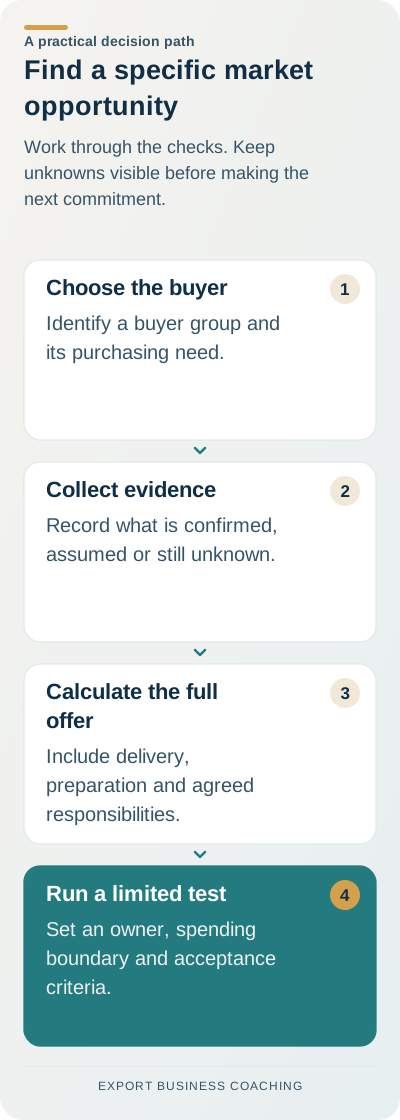
Find a specific market opportunity
Work through the checks. Keep unknowns visible before making the next commitment.
Read the diagram as text
- Choose the buyer
Identify a buyer group and its purchasing need.
- Collect evidence
Record what is confirmed, assumed or still unknown.
- Calculate the full offer
Include delivery, preparation and agreed responsibilities.
- Run a limited test
Set an owner, spending boundary and acceptance criteria.
Food, construction inputs and consumer goods represent different research questions, not one shared opportunity. Choose a product family and investigate the intended use, competing specifications, buying cycle and approval process. A supplier directory or a broad import figure cannot establish that a particular buyer needs your version of the product.
Separate sales for use in the UAE from sales to a distributor serving another destination. Ask where the goods will be used, who will import them and what evidence is needed for acceptance. A trading relationship in one country does not automatically provide access or permission to sell in neighbouring markets.
A free-zone presence is a business-structure decision, not an automatic tax or banking advantage. Confirm the permitted activity, customs treatment, tax obligations and actual service availability with the relevant authorities and qualified providers. Evaluate the proposed product, parties and transaction before committing to setup costs.
A referral can help you reach the right conversation, but it should not replace due diligence. Record the company identity, the contact’s purchasing role and what has been independently verified. Keep the relationship professional by agreeing a clear next step, rather than treating familiarity as proof of financial or operational reliability.
Build a short comparison of two or three market-and-channel options using the same criteria: buyer fit, product requirements, delivered economics and execution effort. Keep unknowns visible. If you want to discuss an opportunity, bring the product description and the decision you need to make; a focused question is more useful than a general forecast of export potential.