Export challenges in Arab markets
An overview of financial, branding, standards and logistics challenges in export development.

Export difficulties are easier to address when they are stated as decisions. “The market is difficult” does not identify what the team should do. “We cannot confirm the required product approval” or “our quotation does not include a verified delivery cost” points to a specific information gap and a responsible next action.
Before negotiating an order, verify whether the proposed transaction, transport and payment can lawfully be supported for the product and parties involved. Ask qualified legal, banking and compliance providers to review the actual case. An intermediary, foreign company or different currency does not by itself remove restrictions or make a payment route acceptable.
Resolve the next export blocker
Work through the checks. Keep unknowns visible before making the next commitment.
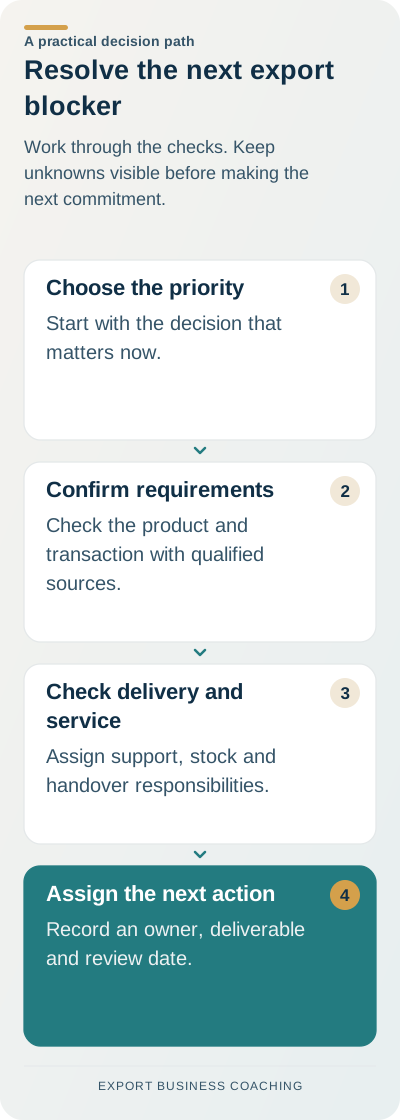
Read the diagram as text
- Choose the priority
Start with the decision that matters now.
- Confirm requirements
Check the product and transaction with qualified sources.
- Check delivery and service
Assign support, stock and handover responsibilities.
- Assign the next action
Record an owner, deliverable and review date.
Packaging should respond to product protection, handling, required information and the buyer’s purchasing context. Start by asking which specifications and label requirements apply. Test whether the commercial material answers the buyer’s practical questions before commissioning an expensive redesign. Do not assume that one language or presentation suits every market and channel.
Use official destination sources to identify the checks required for the exact product. Assign responsibility for confirming classification, permits, testing and documentation with the importer and qualified specialists. Record the source and review date. A general market guide is useful for orientation; it is not approval to ship a particular consignment.
Ask for logistics quotations based on the actual shipment profile, including handling and any temperature-control needs. Clarify exclusions, validity and responsibility for each stage. For a perishable product, define the acceptable conditions and evidence of compliance; choosing a short route is not a substitute for a suitable transport process.
Keep a record of assumptions behind the offer and define when they must be checked again. A change in input cost, requirement or delivery arrangement may call for a revised quotation. Assign someone to maintain that record so that sales, production and the buyer are not working from different versions of the same promise.
Review obstacles in order of their effect on the next commitment. Resolve a critical product or transaction question before spending on promotion. Then turn the remaining work into tasks with owners and review dates. If progress has stalled, share the specific blocker in an initial conversation so the discussion can focus on a usable next step.